 Image 1 of 1
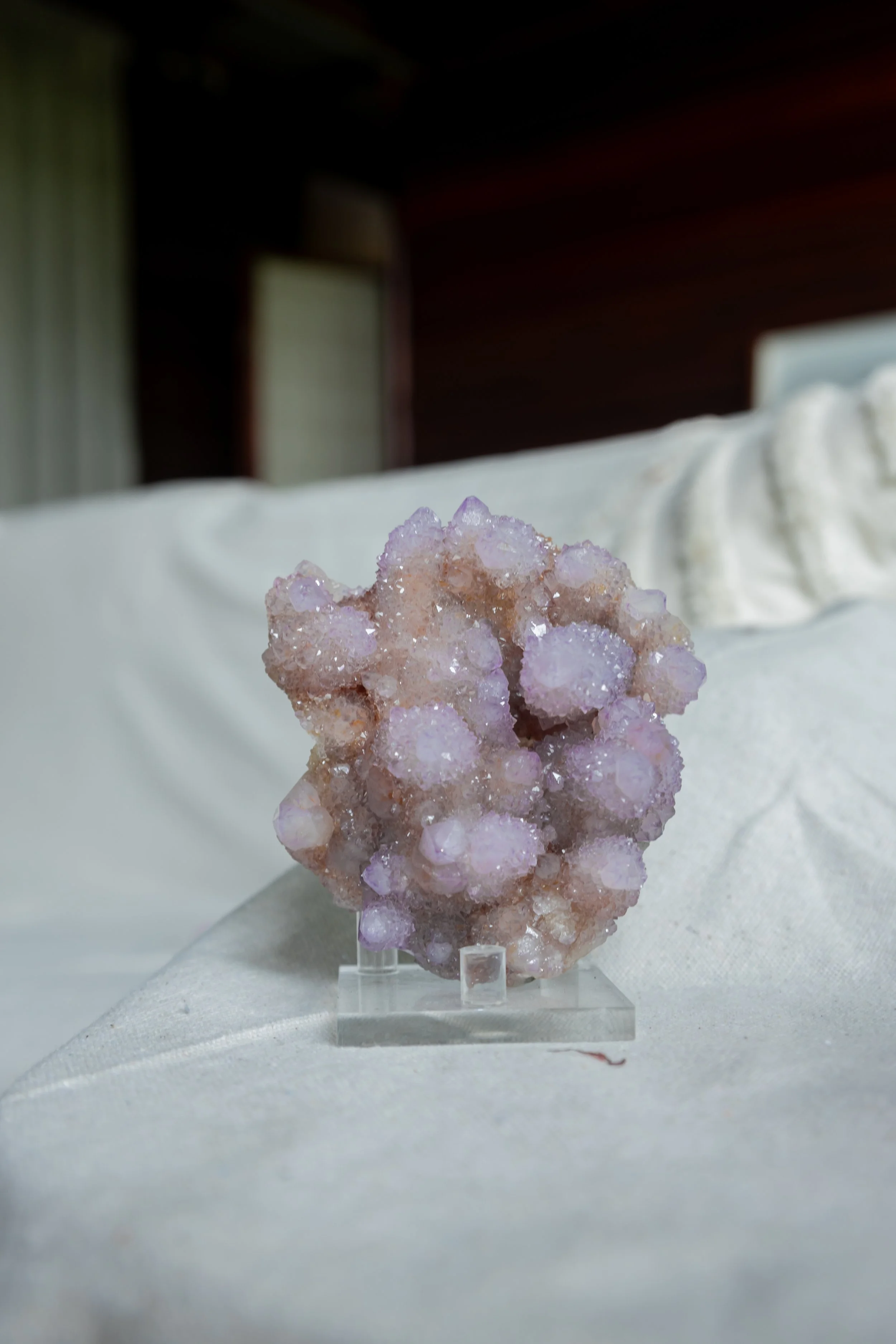
11 × 11 × 7cms
Sourced from South Africa, spirit quartz forms in a very specific region where mineral-rich fluids once moved through cavities in the rock, slowly building these clustered crystal structures over time. The result is a single core crystal covered in hundreds of smaller points, all naturally formed in place.
These pieces aren’t pulled from large-scale industrial mines.
Most spirit quartz is collected through small-scale, manual mining. Miners work close to the surface, digging into weathered rock and clay-rich soil where pockets of crystals have formed. In some areas, they follow shallow seams or break open host rock by hand to reveal what’s inside.
It’s slow, physical work.
Rather than heavy machinery or demolition-style mining, it’s often a process of carefully exposing pockets and removing the crystals without damaging the fine points that cover them. That’s why well-preserved pieces like this stand out, the formation is delicate and easy to knock or break during extraction.
The region itself is dry, rugged, and relatively remote. These crystals come out of the earth in conditions that haven’t changed much for decades, which adds to their character.
There’s something very real about a piece like this.
You’re not just looking at the crystal itself, but the environment it formed in, and the hands that brought it out of the ground.
Textural, detailed, and completely unique.
11 × 11 × 7cms
Sourced from South Africa, spirit quartz forms in a very specific region where mineral-rich fluids once moved through cavities in the rock, slowly building these clustered crystal structures over time. The result is a single core crystal covered in hundreds of smaller points, all naturally formed in place.
These pieces aren’t pulled from large-scale industrial mines.
Most spirit quartz is collected through small-scale, manual mining. Miners work close to the surface, digging into weathered rock and clay-rich soil where pockets of crystals have formed. In some areas, they follow shallow seams or break open host rock by hand to reveal what’s inside.
It’s slow, physical work.
Rather than heavy machinery or demolition-style mining, it’s often a process of carefully exposing pockets and removing the crystals without damaging the fine points that cover them. That’s why well-preserved pieces like this stand out, the formation is delicate and easy to knock or break during extraction.
The region itself is dry, rugged, and relatively remote. These crystals come out of the earth in conditions that haven’t changed much for decades, which adds to their character.
There’s something very real about a piece like this.
You’re not just looking at the crystal itself, but the environment it formed in, and the hands that brought it out of the ground.
Textural, detailed, and completely unique.